
Last Updated on August 12, 2025
As of August 12, 2025, Tropical Storm Erin is steadily crossing the Atlantic, gathering strength and capturing the watchful attention of meteorologists. Could Florida be next on its radar?
Let’s dive into what we know and what remains uncertain.
Erin: From Tropical Storm to Possible Major Hurricane
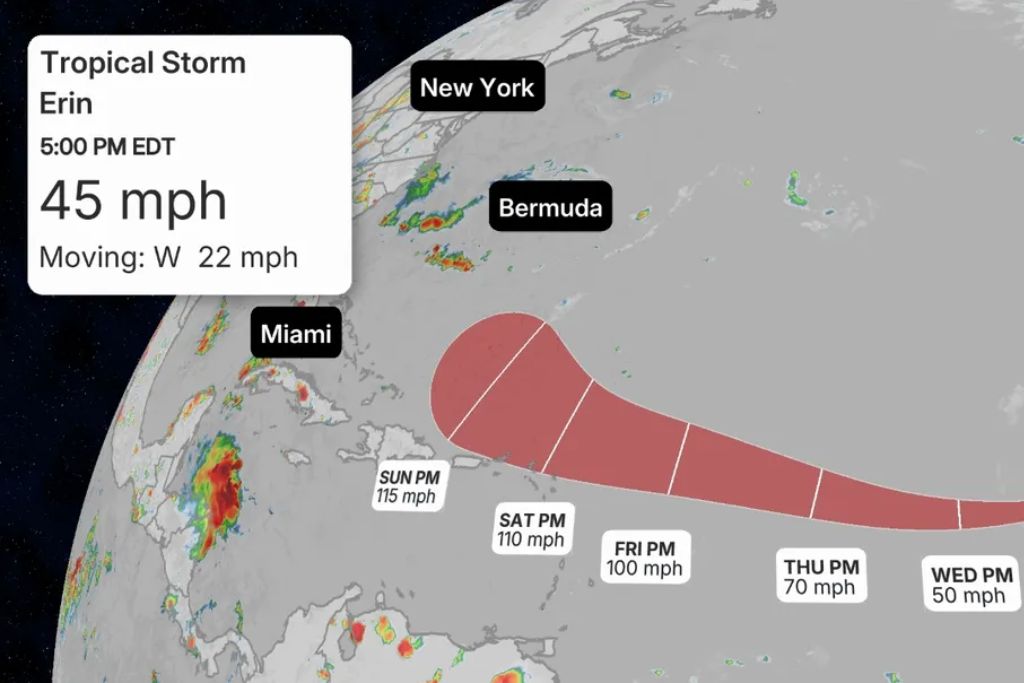
Currently, Erin is making its journey west from the Cape Verde region, moving at roughly 20–23 mph with sustained winds around 45 mph, along with higher gusts in certain areas.
Over the coming days, forecasters anticipate gradual intensification.
The National Hurricane Center (NHC) projects that Erin could upgrade to a hurricane by late Wednesday or Thursday, with the potential to continue strengthening into a Category 3 major hurricane by the weekend.
Booking a last-minute trip to Florida?
If so, we have you covered. Here are some top recommended tours and experiences!
Top Tours in Florida – Viator
Top Hotels In Florida – Booking.com
Looking To Get Around In Florida?
Check out rental car rates here! 🚗
Models Lean Away from Florida—for Now
So, what’s Erin’s projected path?
It’s still too early to know for sure, but most computer models currently suggest a west-northwest trajectory that veers north well before reaching the Southeast U.S., threading a path between the U.S. coast and Bermuda.
For residents of cities like Jacksonville, that means no immediate threat; existing tracks keep Florida’s coastline largely untouched as of now.
Still, the NHC emphasizes that models may shift, and as Erin gains strength and reacts to atmospheric changes, updates could alter the storm’s projected path.
What This Means for Florida—What Could Be
Right now, Florida is not in the storm’s direct forecast path—but that doesn’t mean there won’t be indirect impacts.
If Erin swerves north off the East Coast, we could still see rough surf, elevated tides, and rip currents affecting beaches, especially along the Atlantic side.
These conditions could pose serious risks to swimmers, beachgoers, and low-lying coastal areas.
Photo Credit: The Weather Channel
Why Vigilance Matters, Even When Florida Is Not in the Direct Path
Erin’s current distance, thousands of miles from Florida, is no reason to let defenses down.
Hurricane forecasting during early development stages is notoriously fluid. Meteorologists urge all coastal communities to remain prepared.
Actionable steps include:
-
Reviewing and updating emergency plans
-
Assembling or replenishing disaster kits
-
Ensuring important documents are secured and waterproofed
-
Reviewing insurance coverage, including flood insurance, which may have specific policy windows
These measures build resilience, no matter Erin’s final course.

What Florida Can Learn from Past Storms
Florida’s history with hurricanes teaches a valuable lesson: even storms that don’t make landfall can leave a mark.
Take Hurricane Irma in 2017, a storm that devastated swaths of Florida with catastrophic winds, massive flooding, widespread power outages, and costly structural damage.
Similarly, Hurricane Hermine in 2016 caused significant wind damage and storm surge along Florida’s Gulf Coast.
Looking further back, the 1995 Hurricane Erin made landfall in the Florida Panhandle.
It knocked out power for over a million people, damaged thousands of structures, and claimed nine lives in Florida.
These storms underscore the importance of preparedness—even when early projections place Florida outside the core risk zone.
Erin & Florida Risk at a Glance
Current Status: Erin is a tropical storm with winds around 45 mph, moving west at about 20–23 mph.
Forecast Strength: Expected to reach hurricane status by midweek and possibly intensify to a Category 3 major hurricane by the weekend.
Florida Impact Risk: Risk remains low for now, as most models show Erin curving north and staying offshore from the U.S. coast.
Indirect Hazards: Rough surf, dangerous rip currents, and possible beach erosion may occur even without a direct landfall.
Florida Readiness: Residents should still review emergency plans, restock supplies, and secure important documents now.
Lessons from Past Storms: Even storms that stay offshore can still cause serious impacts in Florida, from flooding to dangerous coastal conditions.

Final Take: Will Florida Feel Erin?
At present, Florida appears unlikely to bear the brunt of Hurricane Erin.
Forecast models track the storm safely offshore, predicting a northeast arc away from U.S. coastal landmasses.
However, it’s still early, and tropical systems are famously fickle. Erin’s trajectory and intensity may shift depending on evolving environmental factors.
Moreover, indirect consequences, such as heightened surf or rip currents, could still ripple into Florida.
The bottom line: stay alert, stay informed, stay prepared. Erin may not be bearing down on Florida, but vigilance today can make all the difference tomorrow.

Follow Our Discover Florida Facebook Page!
We’re Also On Pinterest!
Booking a last-minute trip to Florida?
If so, we have you covered. Here are some top recommended tours and experiences!
Top Tours in Florida – Viator
Top Hotels In Florida – Booking.com
Looking To Get Around In Florida?
Check out rental car rates here! 🚗