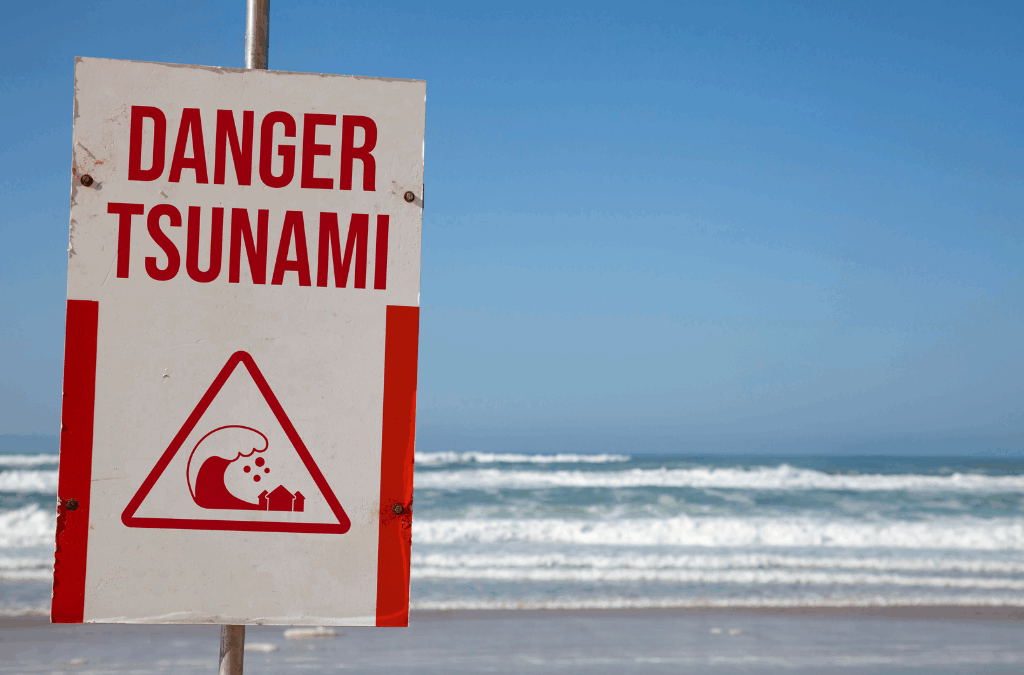
That might seem far-fetched. However, the July 2025 tsunami alerts, triggered by a massive 8.8 magnitude earthquake near Kamchatka, Russia, renewed public interest in tsunami risk across the Pacific.
So in 2025, how safe is Florida from tsunamis? Let’s break it down.
Booking a last-minute trip to Florida?
If so, we have you covered. Here are some top recommended tours and experiences!
Top Tours in Florida – Viator
Top Hotels In Florida – Booking.com
Looking To Get Around In Florida?
Check out rental car rates here! 🚗
Tsunami 101: Formation & Types
Traditional tsunamis are caused by tectonic events—major earthquakes, submarine landslides, or volcanic eruptions displacing ocean water.
These typically occur at plate boundaries like the “Ring of Fire.”
Another type, meteotsunamis, arise from rapid atmospheric changes and can produce strong local wave surges.
These are rarer but not tied to seismic activity.
The July 2025 Pacific Tsunami Incident
On July 30, 2025, a magnitude 8.8 earthquake struck off Russia’s Kamchatka Peninsula, triggering tsunami warnings across the Pacific, impacting Japan, Hawaii, South America, and the U.S. West Coast.
Waves up to 5 meters (approximately 16 feet) were recorded at Severo-Kurilsk in Russia.
Hawaii detected waves up to 1.7 meters, prompting evacuations before warnings were later downgraded or lifted.
The U.S. West Coast experienced small surges, including waves up to 1.4 feet in Crescent City and moderate disturbances in California and Oregon harbors.
This large-scale alert underscores how seismic events, even thousands of miles away, can prompt widespread preparedness responses.

Florida’s Tsunami Risk: Experts Say It’s Extremely Low
Florida is hundreds of times further from plate boundaries than those Pacific hot zones.
The state’s tsunami risk is generally considered negligible for seismic tsunamis.
According to both NOAA and Florida emergency agencies, the chance of a tsunami generated by tectonic movement reaching Florida is virtually zero.
Florida has experienced only a few minor wave events historically, often linked to distant Caribbean earthquakes or local meteotsunamis, but none comparable to Pacific incidents.
Meteotsunamis: The Main Concern for Florida
Florida isn’t free of wave risks. Meteotsunamis, driven by rapid barometric shifts, are more plausible than seismic tsunamis.
Although infrequent, they pose real danger: sudden coastal surges, powerful currents, and flooding.
For example, Florida recorded its most significant meteotsunami in 1992 at Daytona, which caused injuries and damage due to strong, unexpected waves.

Warning Systems & Emergency Preparedness
Florida is covered by the National Tsunami Warning Center (NTWC), which monitors global seismic activity and operates deep‑ocean buoys.
Yet, Florida relies more heavily on hurricane preparedness given the state’s high exposure to storms.
Unlike Pacific tsunami zones, Florida does not have widespread local siren systems or vertical evacuation towers specifically for tsunamis.
However, residents are encouraged to heed warnings, move inland if advised, and treat any abnormal wave behavior seriously.
In the recent Pacific-wide event, authorities across Hawaii and the U.S. West Coast activated evacuations shortly after alerts were issued, even though damage later proved limited.
Practical Advice for Florida Beachgoers & Residents
Stay informed via official sources—NOAA, NTWC, and local emergency agencies—not social media or AI tools, which sometimes miscommunicate during an evolving crisis (as seen in the recent July warnings).
Recognize natural warning signs—sudden sea level drop, unusual currents, or rapid receding water from the shore.
Follow hurricane preparedness protocols during June–November, including evacuation plans, kits, and readiness.
Treat tsunami advisories with caution, even if they’re downgraded, especially for non‑Pacific events that may still produce local impacts.
Support coastal awareness programs—some Florida communities participate in NOAA’s “TsunamiReady” initiative even if risk remains low.

Conclusion: Florida’s Tsunami Outlook in 2025
Florida remains overwhelmingly safe from traditional tsunamis. No Florida community has experienced a destructive seismic tsunami in recorded history.
However, the July 2025 Kamchatka earthquake and resulting tsunami alerts serve as a reminder: seismic events on one ocean basin can trigger global alerts and preparedness action—even thousands of miles away.
Florida’s true concern remains hurricanes, not tsunamis. But coastal awareness, including knowledge of meteotsunamis and official evacuation guidance, helps ensure safety no matter what nature throws your way.
Safe travels!

Follow Our Discover Florida Facebook Page!
We’re Also On Pinterest!
Booking a last-minute trip to Florida?
If so, we have you covered. Here are some top recommended tours and experiences!
Top Tours in Florida – Viator
Top Hotels In Florida – Booking.com
Looking To Get Around In Florida?
Check out rental car rates here! 🚗